


A lot of small business owners spend $5,000 to $10,000 on a brand-new website, wait eagerly for the launch, and then hear complete silence. The site looks sleek, the animations are smooth, but the phone does not ring and the contact form stays empty. It is one of the most common stories we hear on a first call.
Web design for small business works when the site is built to answer a local customer's first question, "can this business solve my problem right now?", instead of chasing design awards. A website that converts passes a five-second clarity test, so a visitor knows what you do, where you work, and what to do next before they scroll. It puts your phone number in a tap-to-call button, not a graphic. It gives every core service and service area its own page. It shows live Google reviews pulled from your Google Business Profile instead of typed-out quotes. And it loads in under three seconds on a phone. Fix those five things and the site starts working like a salesperson instead of a brochure.
76%
Of people who search nearby on a smartphone visit a business within a day
73%
Of local searches start on a mobile device
53%
Of mobile visits are abandoned when a page takes longer than 3 seconds to load
Sources: Think with Google · BrightLocal Local SEO Statistics · Google mobile speed research
The five-second rule: clarify above the fold
When a potential client lands on your homepage, they need three questions answered immediately without scrolling:
1. What do you do? (Clear, plain-language headline)
2. Where do you do it? (Exact service cities and service areas)
3. What is the next step? (Unmissable call to action button)
How to fix your hero section
- Replace abstract taglines with direct service positioning (e.g., "Expert Residential Plumbing in Fort Wayne, IN").
- Place a primary action button ("Get a Free Estimate" or "Call Now") prominently above the fold.
- Keep the header clean and uncluttered. Avoid slow background video loops.
Frictionless mobile experience and click-to-call functionality
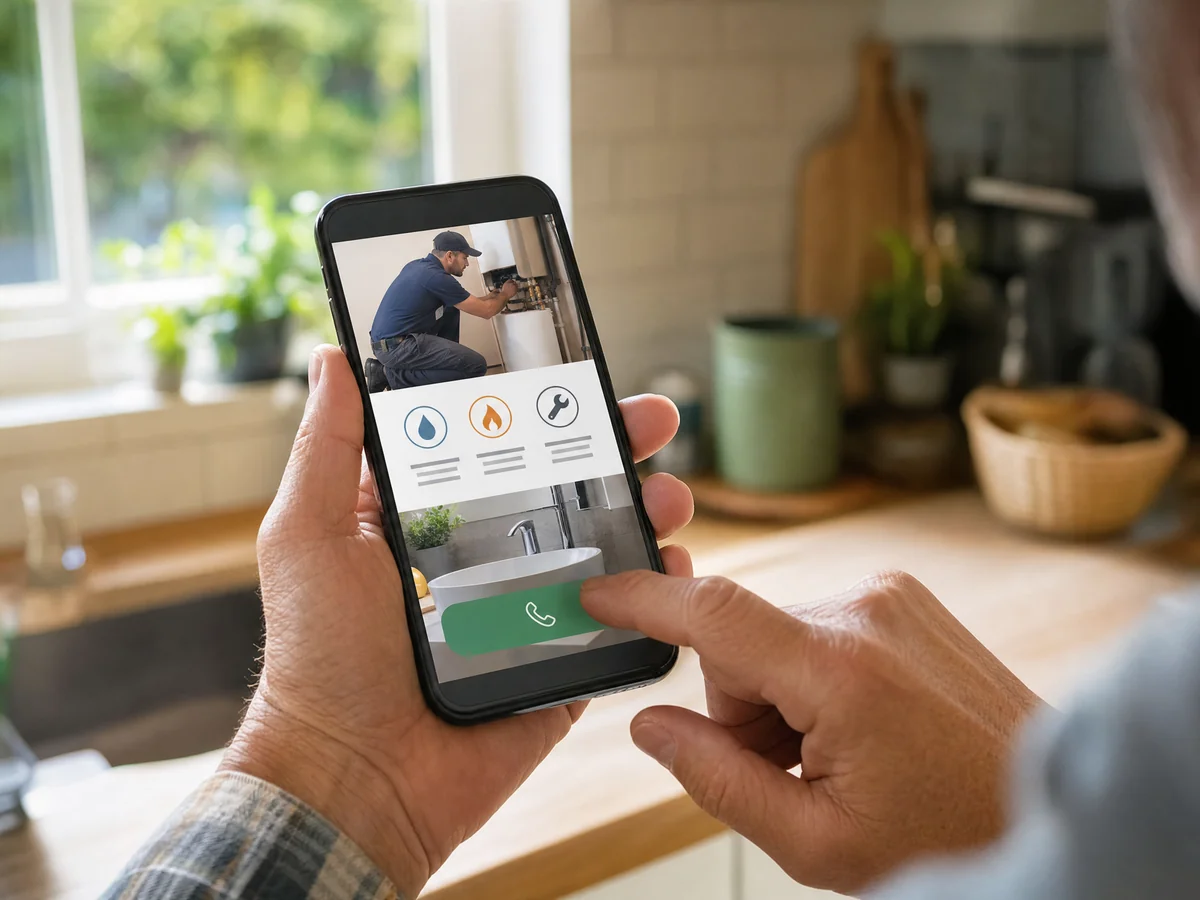
According to BrightLocal's local search research, 73% of local searches start on a mobile device. When an emergency strikes or an owner needs a quote during lunch, they are using a smartphone. If your phone number is an unclickable graphic or buried in a footer, you lose the lead.
Mobile conversion standards
- Make every phone number a direct tap-to-call link.
- Implement a persistent bottom mobile bar with an instant "Call Now" or "Get Quote" button.
- Keep quote request forms short: ask only for name, phone number, and project type on initial intake.
Your website is not an art project. It is your 24/7 salesperson.
What pages does a local service website need?
A single "Services" page listing ten bullet points will never rank well on Google or convert high-ticket clients. Customers want dedicated information about the specific problem they are trying to solve, and Google has a much easier time matching a specific page to a specific search than a generic one.
Page architecture setup
- Build dedicated pages for each core service you provide (e.g., /water-heater-repair, /drain-cleaning).
- Build dedicated service area pages for major towns in your territory.
- Include localized proof, photos, and customer testimonials on every specific service page.
- Keep your business name, address, and phone number identical on every page and on every listing. Google cross-checks them, and mismatches cost you trust (see why inconsistent business listings hurt local rankings).
Live social proof and Google review integration
Trust is the single largest hurdle in hiring a local service provider. BrightLocal's 2026 Local Consumer Review Survey found that 97% of consumers read reviews for local businesses. Having static, typed-out quotes like "Great service! - John D." looks fabricated and does not build confidence.

Trust builders that work
- Embed a live, verified Google review widget that pulls recent reviews directly from your Google Business Profile. Fresh reviews carry more weight than a big pile of old ones (see how stagnant reviews cost local businesses customers).
- Showcase real before-and-after project photos with location tags rather than polished stock photography.
- Display relevant trade licenses, insurance badges, and warranty commitments near your quote forms.
How fast should a small business website load?
Many agencies build small business sites using heavy drag-and-drop themes loaded with dozens of unnecessary plugins. The result is a slow, clunky website that takes four to six seconds to load. Google's own research found that 53% of mobile visits are abandoned when a page takes longer than three seconds to load, and page speed is a confirmed factor in mobile search rankings.
Performance essentials
- Build on clean, lightweight code architectures or optimized WordPress foundations.
- Compress all images into modern WebP format before uploading.
- Eliminate redundant tracking scripts and bloated visual plugins.
What not to do: common web design traps
Avoid these conversion killers
- Do not hide your pricing or process: Customers want clarity. Explain how your estimates and pricing work.
- Do not use stock photos for your team: Show real photos of your trucks, equipment, and technicians. Authentic photos dramatically outperform generic stock models.
- Do not force multi-page contact forms: Every extra required field costs you completions. Keep initial intake to name, phone number, and project type.
Small business web design questions owners ask
Should a small business use WordPress for its website?
WordPress works fine for a small business website as long as it stays lean: a simple theme, a short plugin list, and compressed images. The platform is not what decides whether a site converts. What matters is whether the pages load fast, work cleanly on a phone, and lead the visitor straight to a call or a short quote form. A bloated WordPress build fails the same way a bloated custom build does.
Do I need a separate page for every city I serve?
You need one for every city or town where you actually want jobs. A page for each major service area lets you name the place, show work you have done there, and give Google a specific page to match to a "plumber in Fort Wayne" style search. Skip thin copy-and-paste pages that only swap the city name; each page needs real local detail to earn its place.
Can a Google Business Profile replace a small business website?
No. Your Google Business Profile gets you into the map pack, but the profile links out to your website, and that is where a homeowner checks your services, reads about your process, and decides whether to call. The two work together: the profile earns the click, the website earns the job. A weak website wastes the visibility a strong profile brings in.
How much should a small business website cost?
Judge the cost by payback, not by the price tag. A site that brings in one extra booked job a month is cheap at almost any build price, and a site that never rings the phone is expensive even when it was free. Before you sign, ask the designer how the site will produce calls and quote requests, and what they will measure after launch.
What makes a high converting local website?
A high converting local website works like your best salesperson, and it never clocks out. Pair clear messaging with fast mobile performance, verified social proof, and dedicated service pages, and local search traffic turns into steady inbound calls. Those are the five checks we would run on your site first, and they are the standard we build to at Tuggle Digital. Want an objective look at your website and local search presence? Run the free visibility audit.